
What is Trussless Roofing Explained with Benefits and Uses
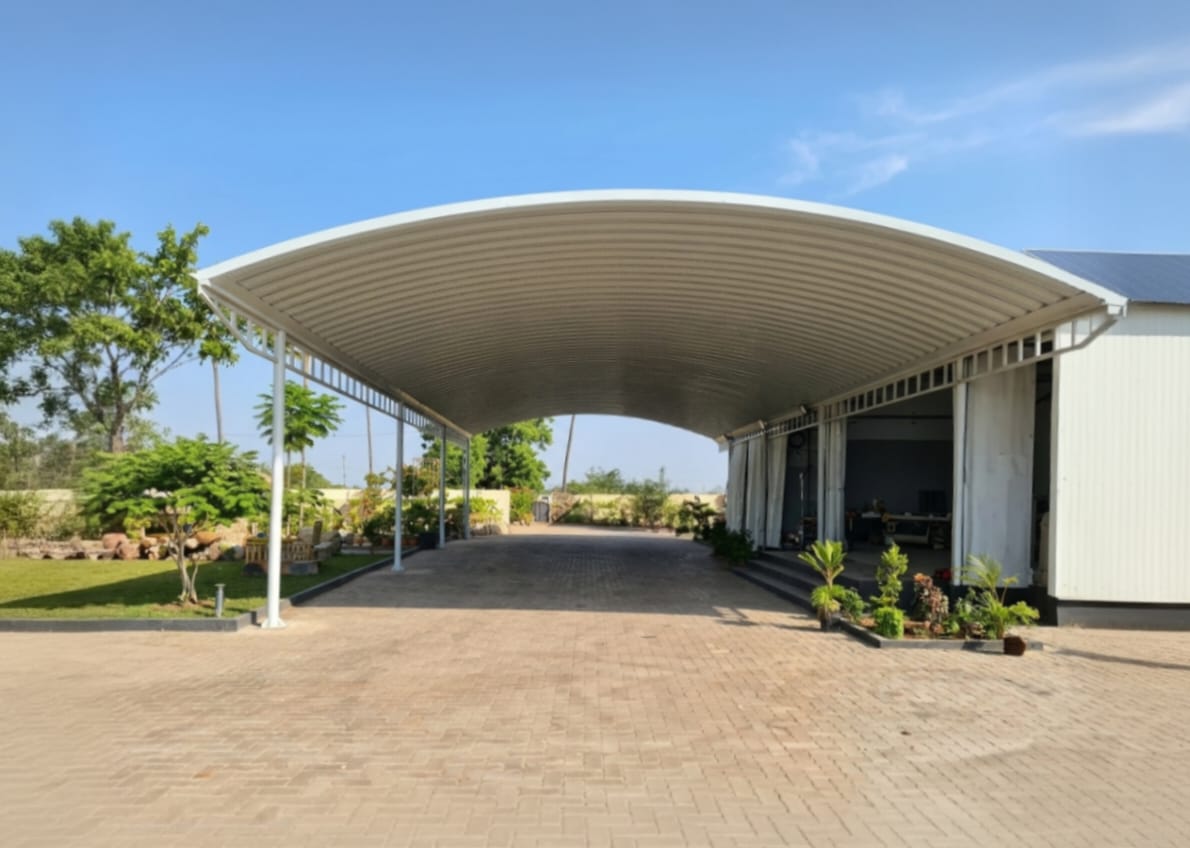
Truss less roofing is a modern roofing method used for large buildings like warehouses, factories, and commercial buildings. Many businesses choose this roofing system because it does not require traditional roof truss work and can cover large areas without columns in the middle.
This article explains what trussless roofing is, its types, benefits, where it is used, and how to choose the right roofing contractor. This guide is useful for building owners, factory owners, warehouse builders, and construction planners.
What is Truss Less Roofing
Truss less roofing is a roofing system that does not use traditional roof trusses to support the roof. Instead of trusses, the roof sheets are designed in a curved or arch shape so the structure supports itself. This allows large buildings to be constructed without internal columns or heavy steel truss structures.
This roofing system is commonly used for industrial buildings, warehouses, factories, and large commercial buildings because it can cover wide areas quickly and cost effectively. Trussless roofing is also known as arch roofing or self supported roofing.
Types or Services or Methods
Arch Roofing
Arch roofing is a curved roofing system where metal sheets are formed into an arch shape. This shape makes the roof strong without needing roof truss work.
Trussless Roofing for Warehouse
Warehouses need large open space for storage and movement. Trussless roofing for warehouse buildings is commonly used because there are no columns in the center.
Trussless Roof for Factory Building
Factories require large working space for machines and production lines. Trussless roof for factory building is suitable because it provides wide clear space.
Industrial Roofing Works
This includes roofing for factories, warehouses, workshops, and industrial sheds using trussless roofing systems.
Benefits and Advantages
Truss less roofing has many advantages compared to traditional roofing systems.
- First, it can cover large areas without columns. This gives more usable space inside the building.
- Second, construction time is faster because roof truss work is not required.
- Third, the cost can be lower because less steel structure is used.
- Fourth, maintenance is low compared to traditional roofing systems.
- Fifth, it is suitable for warehouses, factories, and large commercial buildings.
- Sixth, the curved design allows rainwater to flow easily.
Where it is Used
- Warehouses
- Factory buildings
- Industrial sheds
- Workshops
- Storage buildings
- Agricultural buildings
- Vehicle parking sheds
- Commercial buildings
- Sports indoor stadiums
- Educational institute buildings
Materials or Process or How it Works
The trussless roofing process is done in several steps.
- First, the building measurements and design are prepared.
- Second, special metal sheets like GI sheets or Galvalume sheets are used.
- Third, the sheets are curved using a rolling machine to create an arch shape.
- Fourth, the curved sheets are installed from one side to the other side of the building.
- Fifth, the sheets are joined together using a seaming method to prevent leakage.
- Finally, finishing works and water drainage systems are completed.
How to Choose the Right Service or Product
- Check the contractor experience in trussless roofing for warehouse and factory buildings.
- Check the materials used such as Galvalume sheets or GI sheets.
- Make sure proper design and load calculation is done.
- Ask about waterproofing and drainage system.
- Check previous projects and completed works.
- Make sure the roofing contractor provides installation and maintenance support.
Choosing the right roofing contractor is very important for long lasting roofing.
Why Choose Galava for Truss Less Roofing Work
If you are planning trussless roofing for warehouse, factory building, or industrial shed, choosing the right roofing contractor is very important. A good contractor will ensure proper design, strong structure, and long lasting roofing.
FAQ
Where is trussless roofing used
Trussless roofing is commonly used in warehouses, factory buildings, industrial sheds, workshops, and large commercial buildings where wide open space is required.
What are the advantages of trussless roofing
The main advantages are large column free space, faster construction, lower maintenance, and cost effective roofing for large buildings.
Which material is used for trussless roofing
Common materials used are GI sheets, Galvalume sheets, and coated steel roofing sheets that can be curved into arch shape.
Is trussless roofing good for warehouse
Yes, trussless roofing for warehouse buildings is very suitable because it provides large storage space without internal columns.